

History
Ripped at Molly’s in 2003
 [Editor’s note: For this week’s essay we’ve once again pulled out a relic from the archive of Slim Goodbuzz, who served as Duluth’s “booze connoisseur” from 1999 to 2009. One of Slim’s favorite old stops was Molly’s Tavern in Superior, which had a sign outside promising “dancing & sandwiches,” neither of which could be found inside. The bar closed in 2005 and later became Tower Avenue Tavern. Twenty years ago the Sultan of Sot paid a visit to Molly’s and wrote the article below for the Jan. 22, 2003 issue of the Ripsaw newspaper.]
Whenever I find myself at Molly’s, I’m usually there to “finish up.” Usually, it’s late, I’m half in the bag and I have little interest in anything other than the square foot of bar top directly in front of me — the magical zone in which I lay down money and it miraculously turns into booze. But tonight Sean the Locksmith and I end up at Molly’s relatively early in evening. And I’ll be damned if Molly’s isn’t a pretty sweet place.
This doesn’t really surprise me. I’ve heard many tales of the coolness of this bar: the cheap booze, the weird and amazing antiques scattered about, the mother of Darryl Hall’s child pouring drinks. But maybe it’s to its credit that I’ve never really analyzed it. I go to Molly’s because I want to drink undisturbed. The appreciation of the bar among homosexuals and its seedy location at the very end of Tower Avenue help to keep away most of the local dillweeds. (more…)
Ladies’ Literature Class of Duluth
The Duluth Ladies’ Literature Class leaves few electronic traces outside the local collection at the Duluth Public Library. (more…)
Cut- and Burned-over Timber Land near Duluth
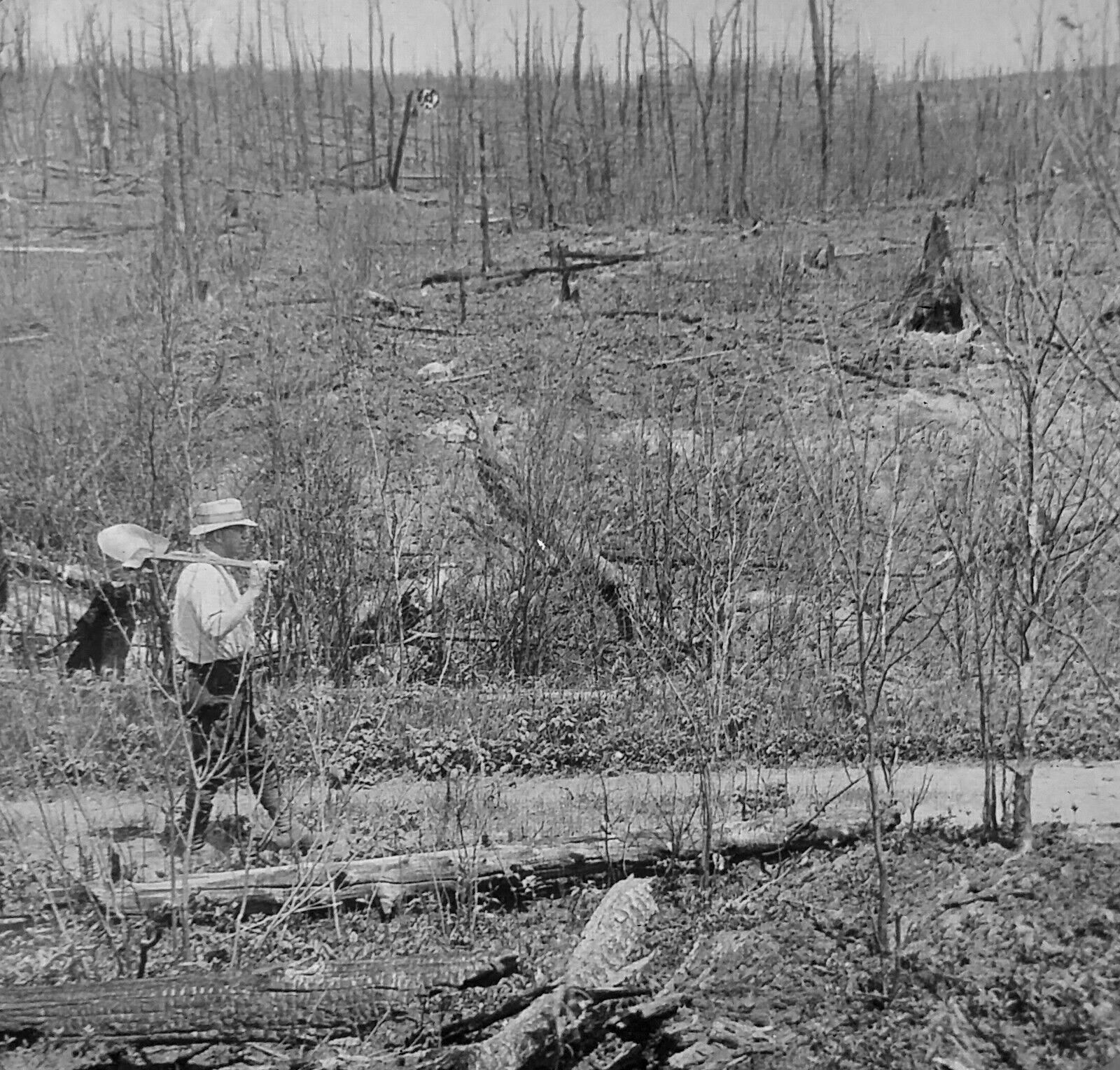
This image is from a stereograph published circa the early 20th century by the Keystone View Company of Meadville, Pa. (more…)
Lester Park Literary Club
In visiting the new local history librarian at the Duluth Public Library, I am uncovering even more gems about the history of writing and literature in Duluth.
One of those gems is the Lester Park Literary Club. (more…)
Mystery Photo: The Ritcheys
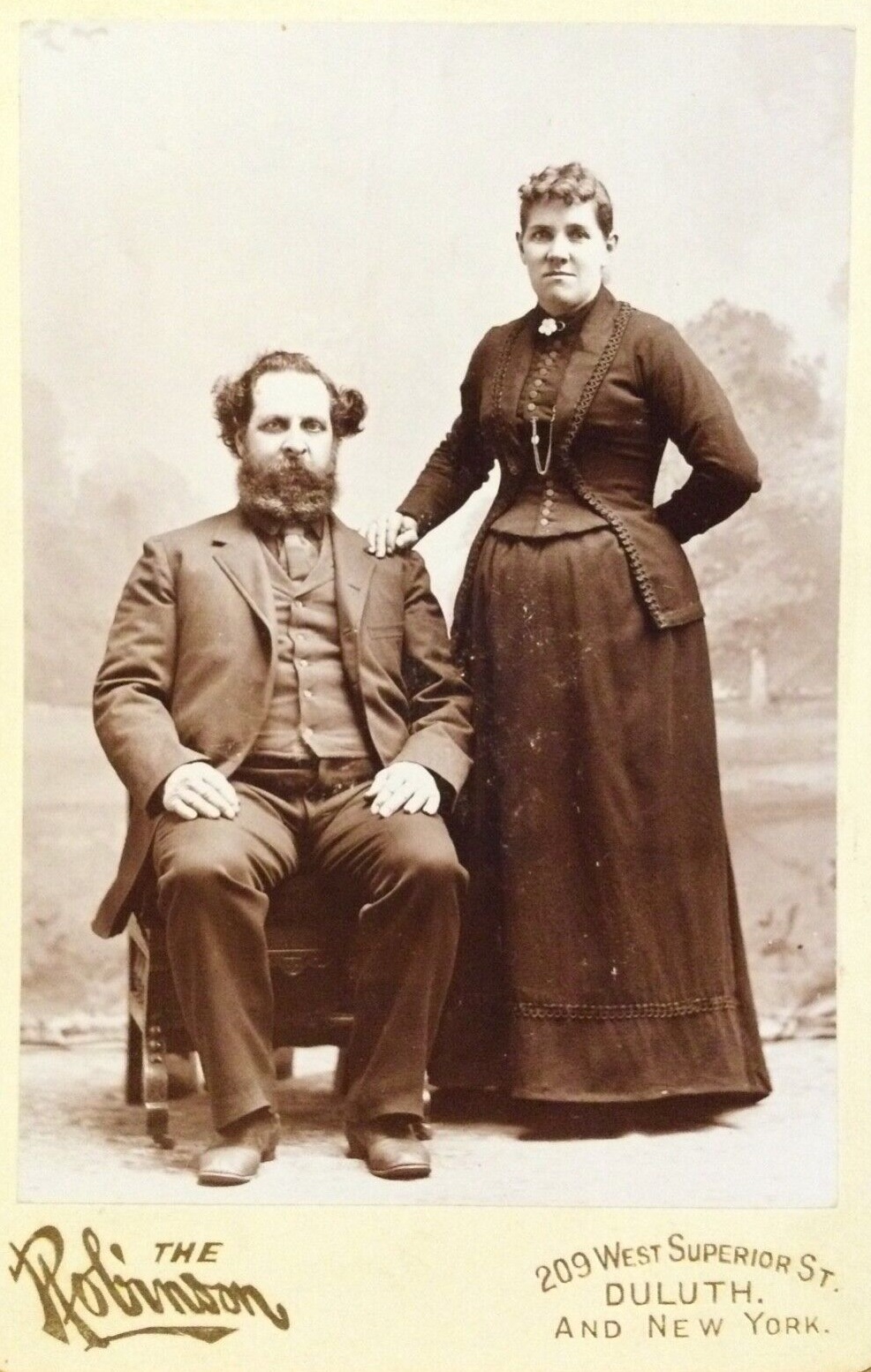
This cabinet card photo of the “Ritcheys” is listed for sale on eBay. Who were the Ritcheys? Well, that’s our primary mystery. The photo was presumably shot in Duluth, being marked with the logo of the Robinson Studio … although the “and New York” below the address is a little confusing. Anyway, it’s supremely likely the Ritcheys either lived in or near Duluth, or visited Duluth about 125 years ago, and that’s about all there is to go on. (more…)

PDD Video Lab: Visit to Duluth, June 1967
This edition of the PDD Video Lab features a panoply of Duluth film footage from the summer of 1967. The segments were made by taking scenes from an 18-minute silent film titled “Visit to Duluth,” breaking them up and adding music.
The first segment features scenes from Chester Bowl Park and Skyline Drive, with views of Peace Church, the Aerial Lift Bridge, Minnesota Point, Enger Tower and so on, set to Marvin Gaye’s mid-1960s hit song “Wonderful One.” (more…)
Historical Documents of the Vista Fleet

Old adverts for Vista excursion-boat tours of the harbor tell us something about why people would visit Duluth and take the boat tour — to see the ships from around the world. The lake and the city skyline mattered less than the almost cosmopolitan dimensions of the Vista experience. (more…)
Postcard from the Spalding Hotel Lounge

This undated postcard shows the stylish design and furnishings in the lounge at Duluth’s Spalding Hotel circa the early 1900s. (more…)
Video Archive: Students return to Grant Elementary in 1983
On Jan. 6, 1983, Grant Elementary School reopened after a six-month, $1.4 million renovation project. WDIO-TV’s Nancy Taggart has the report.
Duluth Antenna Farm
Does anyone have pictures from the early days of the towers at the antenna farm? Pictures from the 1950s to 1960s? I remember years ago seeing pics of the KDAL-TV tower being erected in 1954. The more pics, the better!
Video Archive: Willow River’s Bill Cooper on ‘To Tell the Truth’
“Wild” Bill Cooper, the outlaw snowmobile adventurer from Willow River, was a guest on the CBS television game show To Tell the Truth roughly 50 years ago. (more…)
Postcard from the Rustic Bridge at Lester Park in 1912
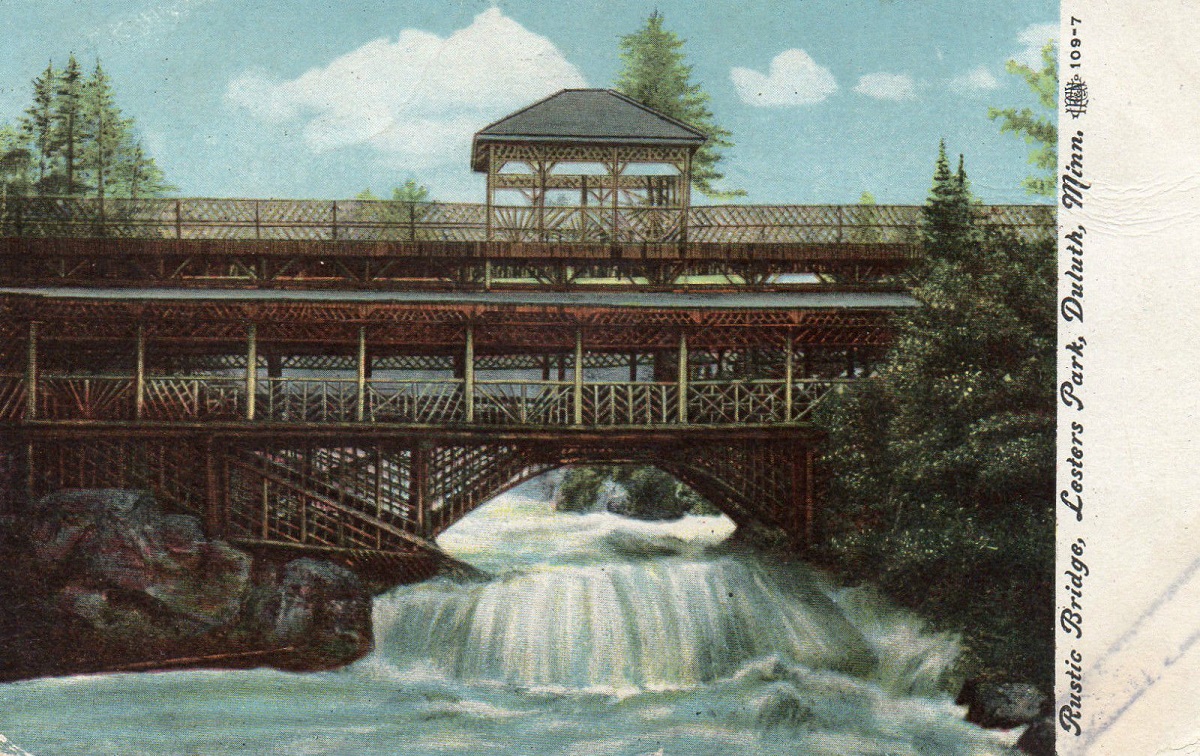
This postcard of the Rustic Bridge at Lester Park was mailed on New Year’s Eve of 1912 — 110 years ago today — to Mrs. Frank Larson of Stockholm, Wis. (more…)
Dunkley’s Celery Compound
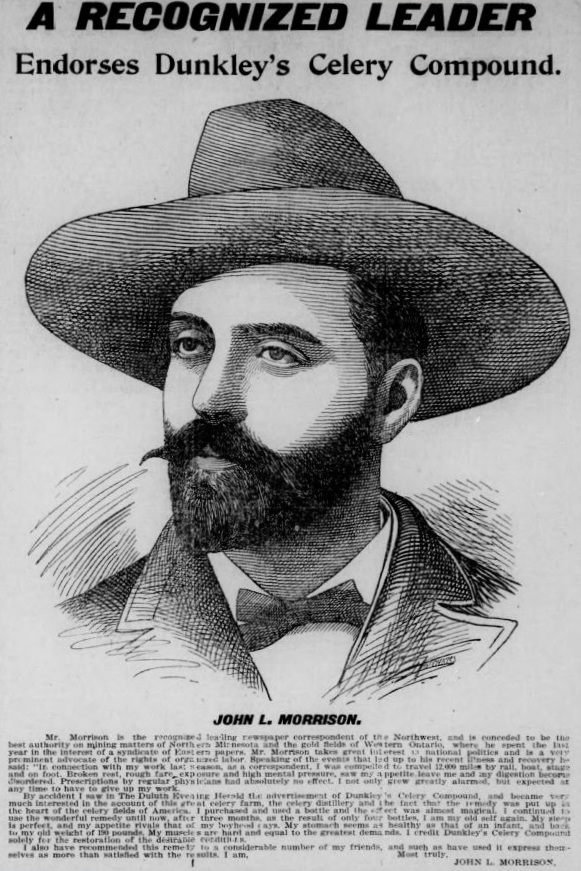
Today, John L. Morrison is best known as the publisher of the muckraking Duluth Rip-Saw from 1918 to 1926, but his period of greatest fame occurred before that, when he was employed by the Duluth Evening Herald. Morrison was well-known regionally as a travel writer and nationally as an authority on the Canadian gold-mining regions. (more…)
Postcard from the Lakeview Castle circa the 1940s
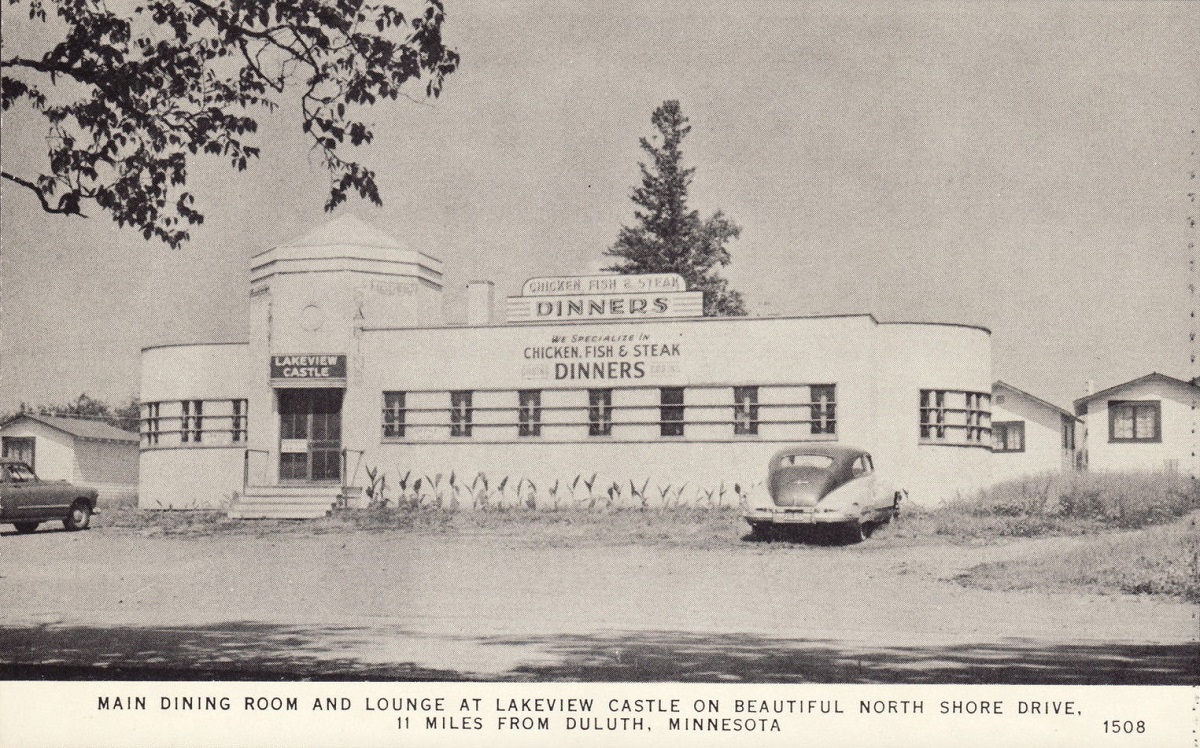
Lakeview Castle, 5135 North Shore Drive in Duluth Township, got its start circa 1914 as a fish stand and coffee shop, eventually growing into a restaurant, lounge and motel.
It ceased operation at the end of 2009 and the Clearwater Grille opened there in the fall of 2010.
Media Excavations: Chun King
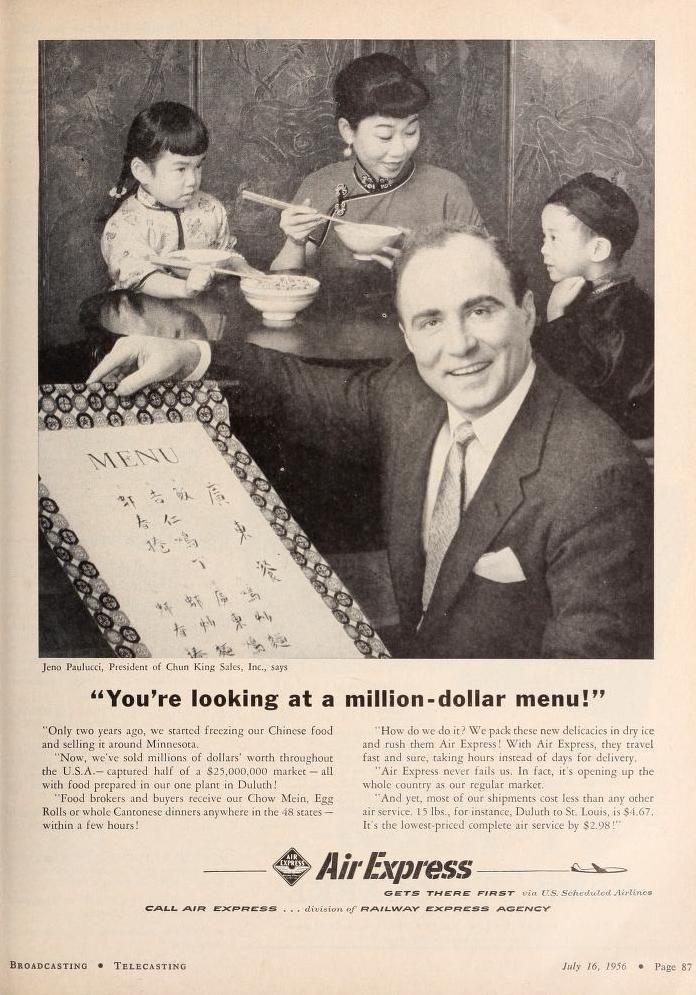
I’d never seen the canned and frozen food magnate Jeno Paulucci until I found this ad in the Media History Digital Library. (more…)
What was the WEBC Traffic Tower?
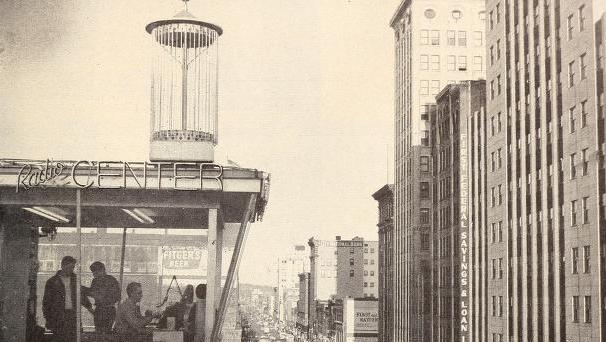
According to the Duluth News Tribune, this WEBC Traffic Tower was located in a glass enclosure on the roof of the building on the northwest corner of Fourth Avenue West and Superior Street. (more…)
WDSM: Queen of the Towers
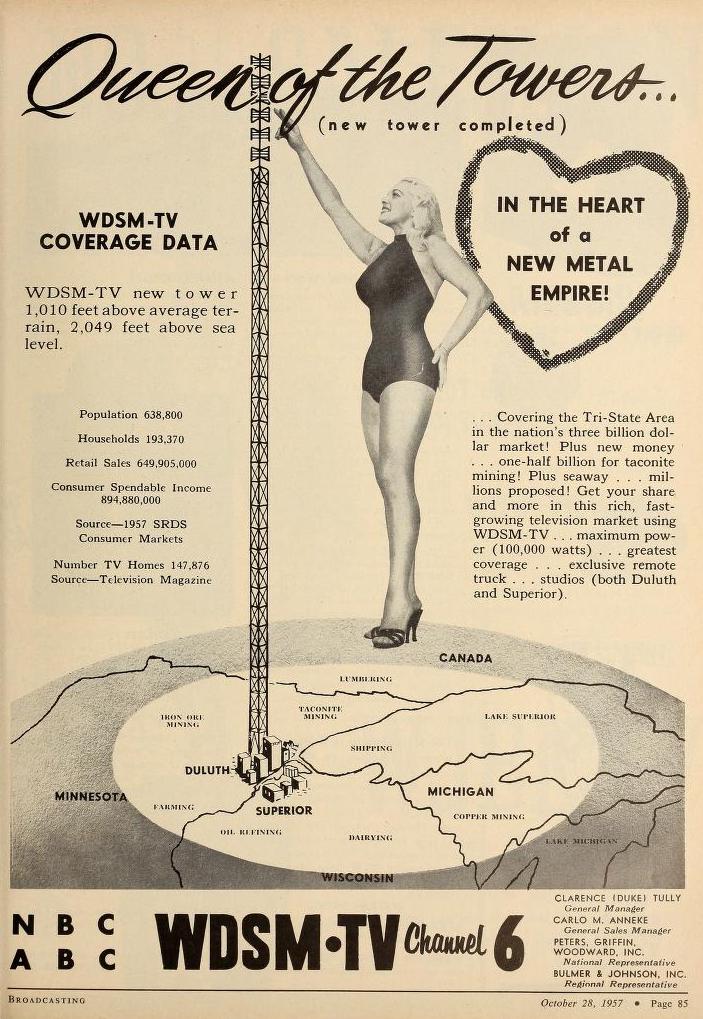
Collected here are 1950s-era advertisements for WDSM-TV, the forerunner to KBJR-TV. The ads appeared in Broadcasting and Sponsor magazines and can be found in the Media History Digital Library. (more…)
When Bobby Heenan broke Greg Gagne’s nose in Duluth
Retired professional wrestler Greg Gagne mentions a match in Duluth on the new Vice cable television series Tales from the Territories. The anecdote occurs after the 19-minute mark in episode 3, titled “AWA: Bodyslams in the Heartland.” (more…)
Comparing Little Italy to Duluth
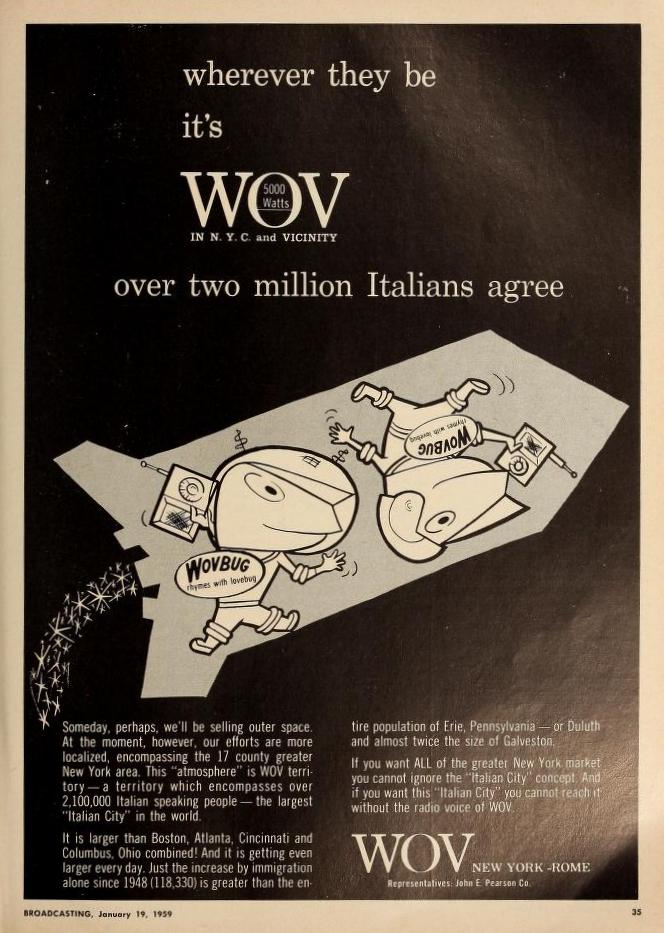
Oddly, this ad uses Duluth as a benchmark against which a reader might understand how many Italians are in New York. For a while, Duluth was one of the 100 biggest media markets in the United States, and so among media professionals it could serve as a benchmark.
From the Media History Digital Library.
Media Excavation: WHYZ in the Age of the Seaway
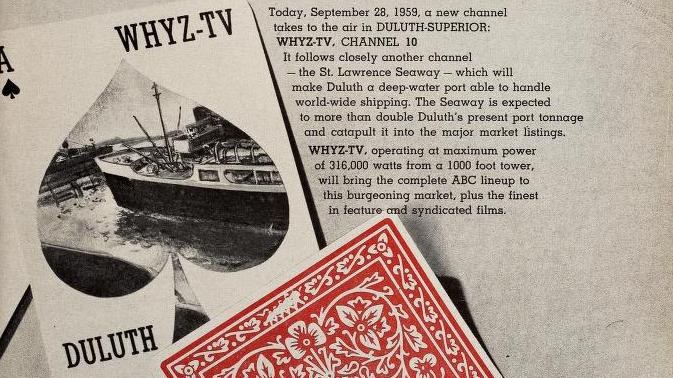
WHYZ was the ABC affiliate in Duluth — I think it would become WDIO? Or did WDIO begin after WHYZ died? (more…)
KDAL sells the Duluth-Superior-Iron Range market
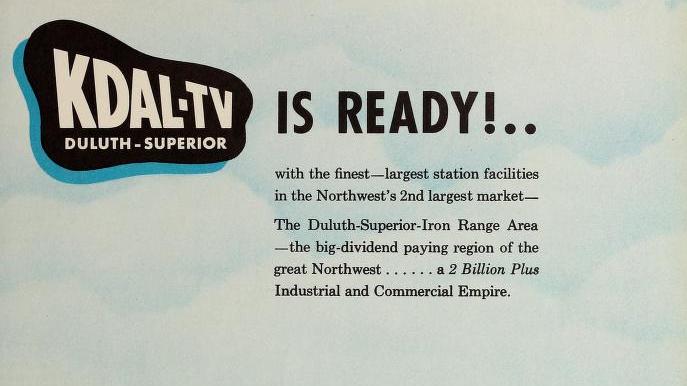
KDAL 610 AM is a commercial talk radio station in Duluth, owned and operated by Midwest Communications. There was also a KDAL-TV, which later became KDLH and then merged with KBJR. (more…)
Media Excavations: Ojibway Publications
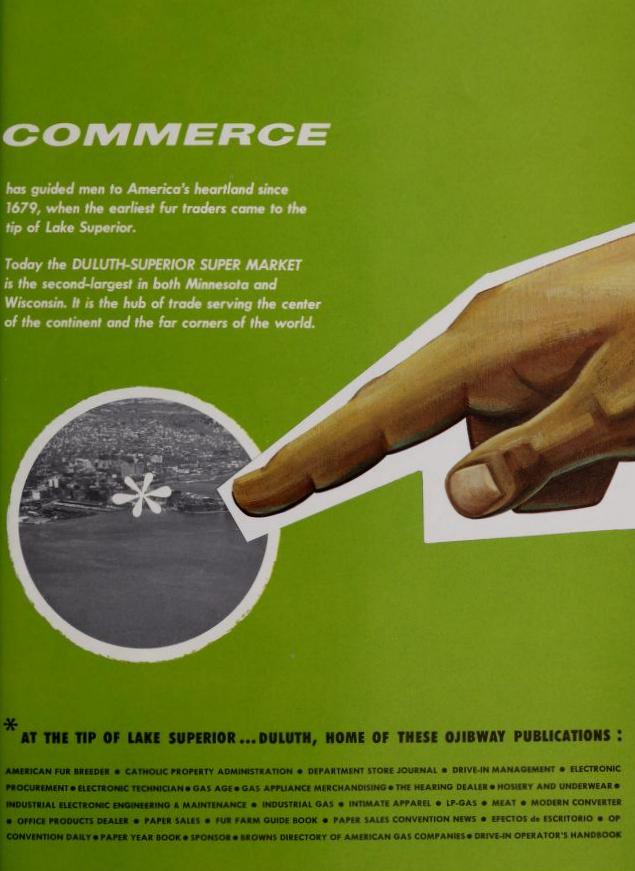
Well, I’m not sure how to feel about posting this advert pulled from the Media History Digital Library, because the name of the company bears no connection to the people, that I can tell …
… but Ojibway Publications was a nationally significant trade-magazine publisher located in Duluth. (more…)
Duluth, a Cosmopolitan City
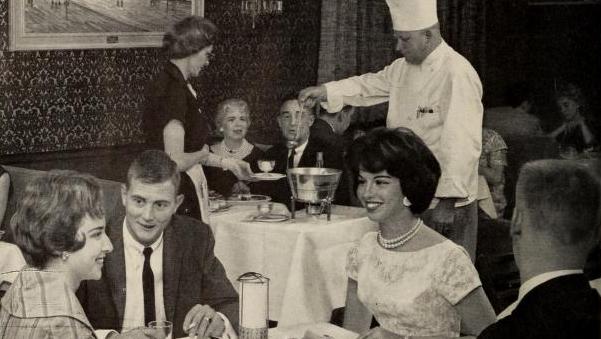
Advertising campaigns for Duluth’s KDAL radio in the trade press were intent on revealing the cosmopolitan dimensions of Duluth. These ads both reveal Duluth’s unique industries and reveal that some of Duluth’s retail, especially, can stand shoulder to shoulder with other major urban areas. (more…)
Media Excavations: Duluth-Superior Television Revolution
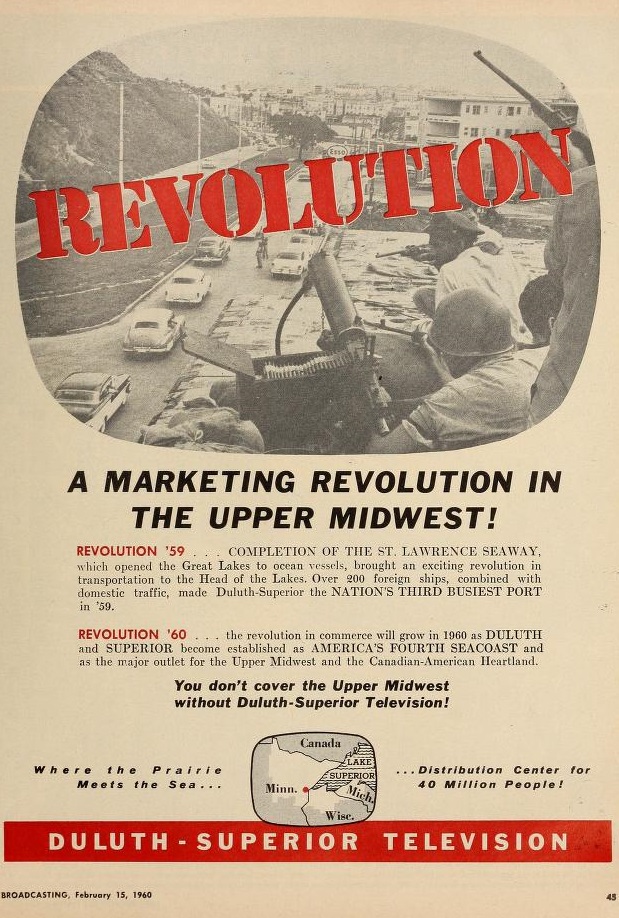
This ad campaign, luring businesses to advertise on TV in Duluth/Superior uses a picture of supporters of the Revolutionary government of Cuba manning a machine gun post overlooking one of the main streets, Zapata Avenue, into the heart of Havana, Jan. 4, 1959. (more…)