

History
Postcard from Superior Street at Fourth Avenue West

This undated postcard shows buildings on the 300 block of West Superior Street in Downtown Duluth. The building in the foreground is the St. Louis Hotel, which was demolished in the early 1930s and replaced by the Medical Arts Building. The trio of buildings to its left — the Torrey, Alworth and Lonsdale buildings — are all still standing.
The postcard was published by the Duluth Photo Engraving Company with an image from McKenzie Photo Company.
Wonderfully Rapid Growth of Duluth
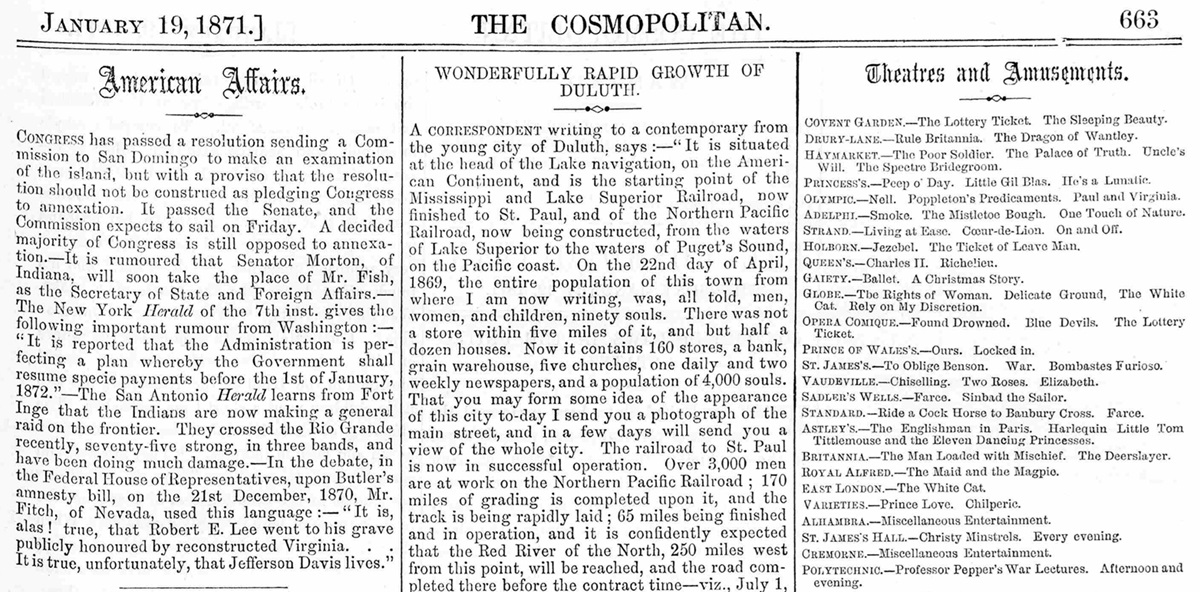
The Cosmopolitan published an article about Duluth on Jan. 19, 1871 — 155 years ago today. It was during the period when the Duluth Ship Canal had been partly dug, so all shipping traffic to that point either went through the Superior Entry between Minnesota and Wisconsin points, or docked at the breakwater built on Duluth’s outer harbor. (more…)
Then and Now: Denfeld High School
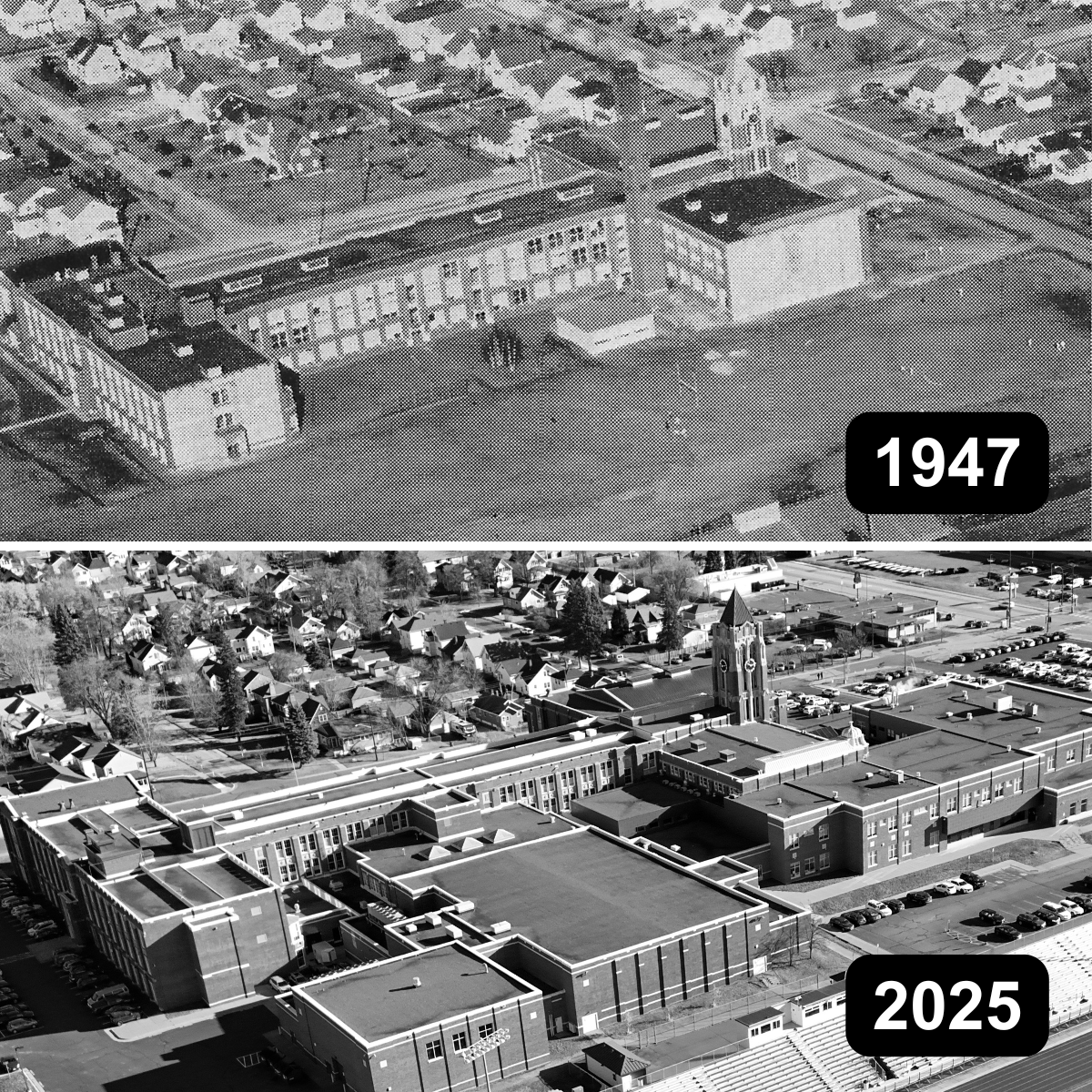
This aerial photo comparison shows Denfeld High School as it looked in 1947 and in 2025. The building first opened in 1926 — 100 years ago — and has seen several additions since then, including a gynasium wing in 1987 and a science wing and common area in 2011. The athletic stadium on campus saw a major renovation in 2002 when a new grandstand was built and the natural grass was replaced with artificial turf. (more…)
Postcard from the Kitchi Gammi Club in 1916

This postcard was mailed Jan 12. 1916 — 110 years ago today. It shows the Kitchi Gammi Club building at 831 E. Superior St., which opened two years prior. (more…)
Duluth Deep Dive #12: Ads from the Archives

Duluth Evening Herald, June 18, 1909; Sept. 5, 1899; Oct. 31, 1908.
While putting together the Duluth Deep Dives, I often come across ads in the Minnesota Digital Newspaper Hub that I find amusing, surprising, well-designed or a direct reflection of the historical period. When I see one of these ads, I make a clip and put it aside in a folder. In what seems likely to be a reoccurring topic, this Duluth Deep Dive goes into those files to present 20 somewhat remarkable ads. (more…)
DuluthiLeaks: MacArthur Elementary PTA Budget for 1979-80
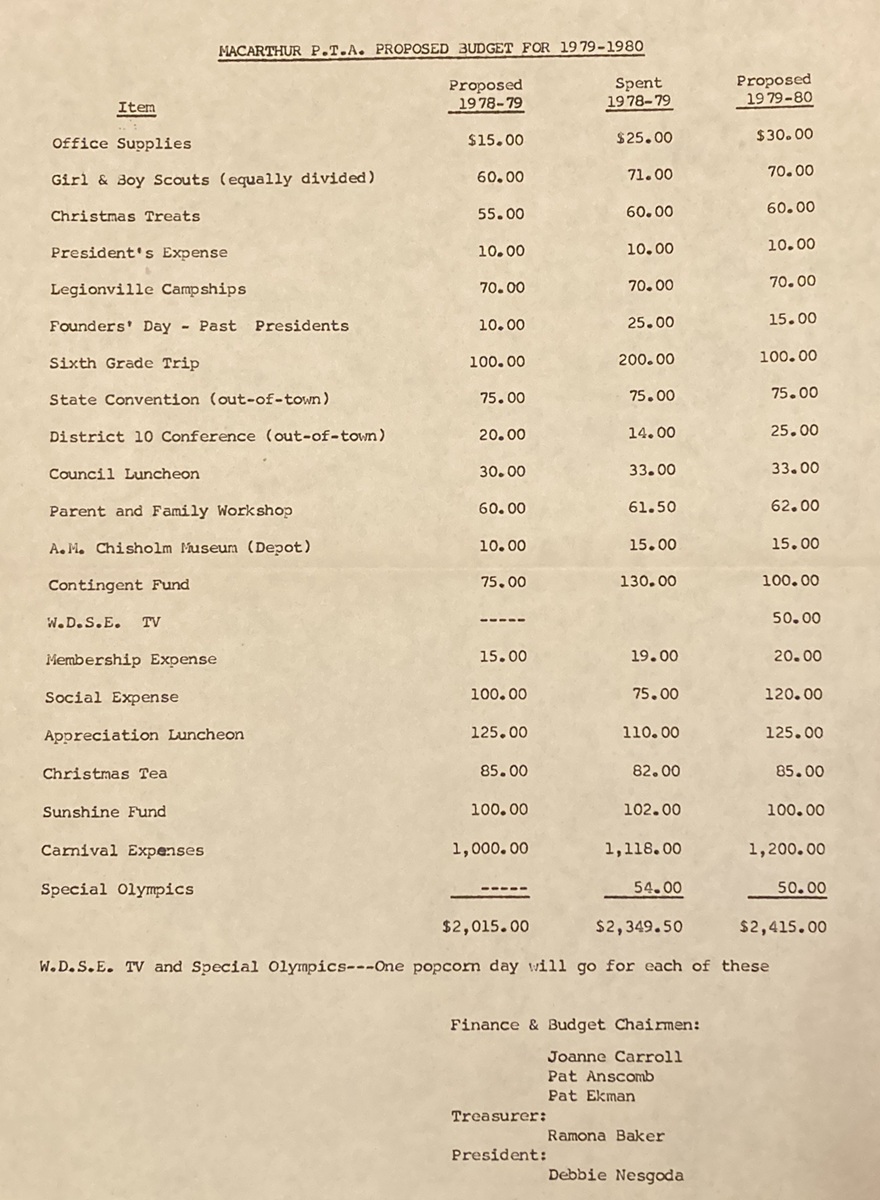
For the seventh edition of DuluthiLeaks — Perfect Duluth Day’s series in which public documents are presented as if they contain secret information leaked from an anonymous whistle blower — we present the Laura MacArthur Elementary School Parent Teacher Association’s proposed budget for the 1979 to 1980 school year.
Postcard from St. Mary’s Hospital circa 1904 to 1911
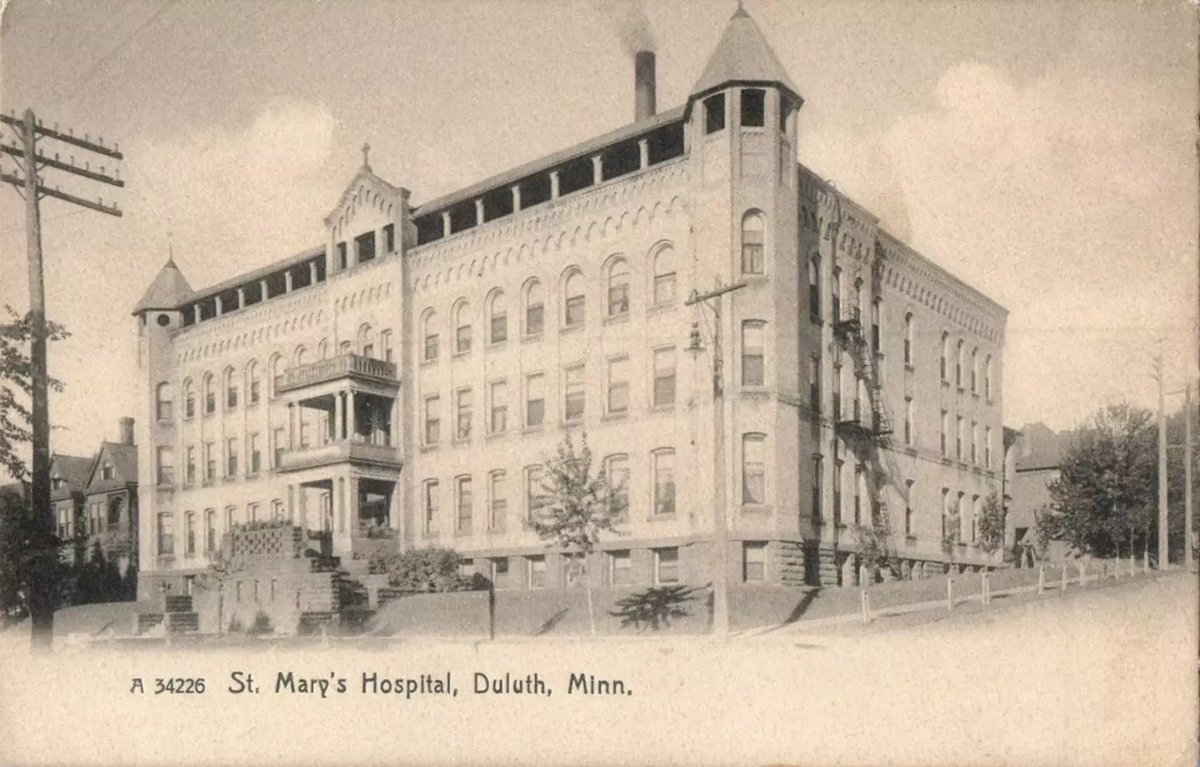
This postcard, published by the Rotograph Company of New York City and printed in Germany, shows St. Mary’s Hospital in Duluth. The card has no postmark, but Rotograph’s postcard operation ran from 1904 to 1911. (more…)
Ernie Nevers pro football debut was exhibition game in 1926
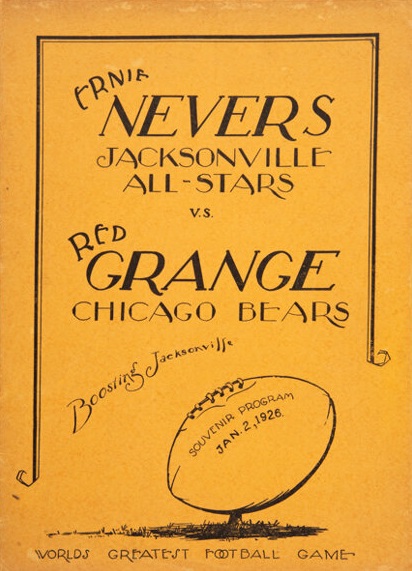
On Jan. 2, 1926 — one hundred years ago today — Willow River native and Superior Central High School standout athlete Ernie Nevers made his pro football debut in an exhibition game in Jacksonville, Florida. He represented the Jacksonville All Stars in a much-hyped game against Red Grange’s Chicago Bears. (more…)
Original Chester Bowl warming house opened at end of 1925
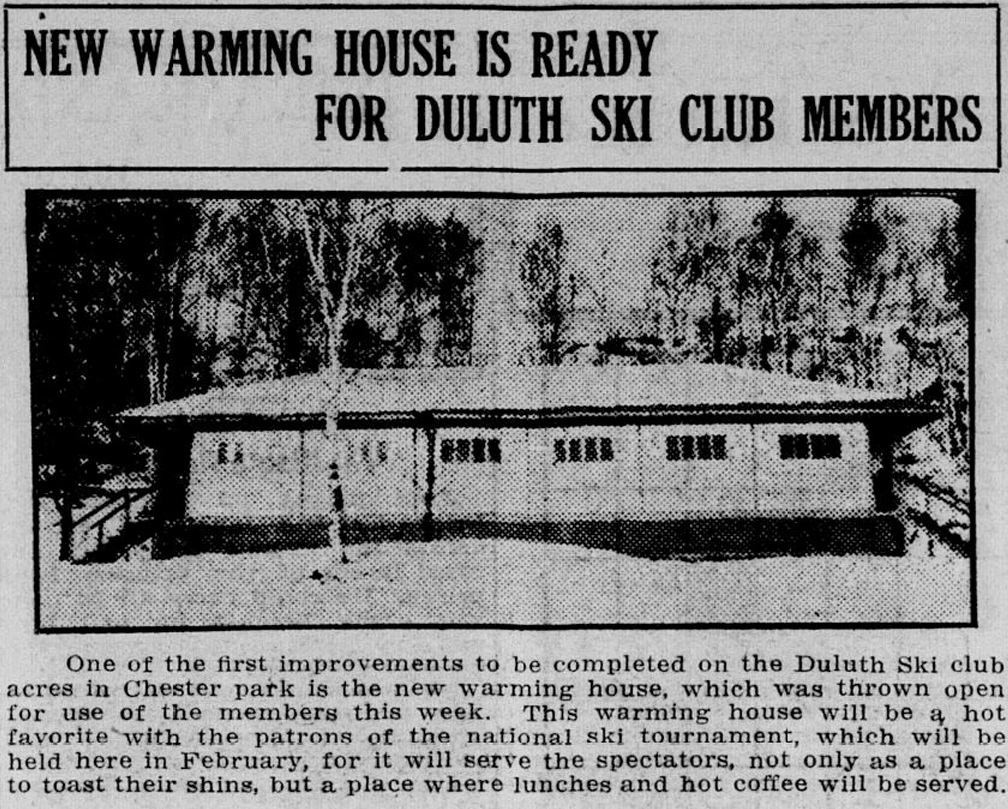
The Jan. 2, 1926 Duluth Herald reported on the recent opening of a warming house at Chester Park, one month ahead of the national ski tournament held there. A new chalet was built at the ski hill in 1972. It was named the Thom Storm Chalet following Storm’s 2015 retirement as Chester Bowl’s director. An expansion and renovation project for that chalet is planned for later this year.
A Texan from out near Duluth, Minnesota
The World War II film A Walk in the Sun premiered Dec. 25, 1945 — 80 years ago today. A song early in the movie mentions Duluth. (more…)
Looking out from Enger Tower circa 1965

This uncredited photo shows a view of Duluth from Enger Tower looking out over Observation Hill to the downtown and waterfront. It is dated 1965. (more…)
Bob Dylan’s Spirit Mountain Adventure

Bob Dylan arrived in Duluth for a holiday ski party at Spirit Mountain on Dec. 20, 1975. The ski hill had just opened one year prior. (more…)
Postcard from ‘Our Little Home’ in Duluth
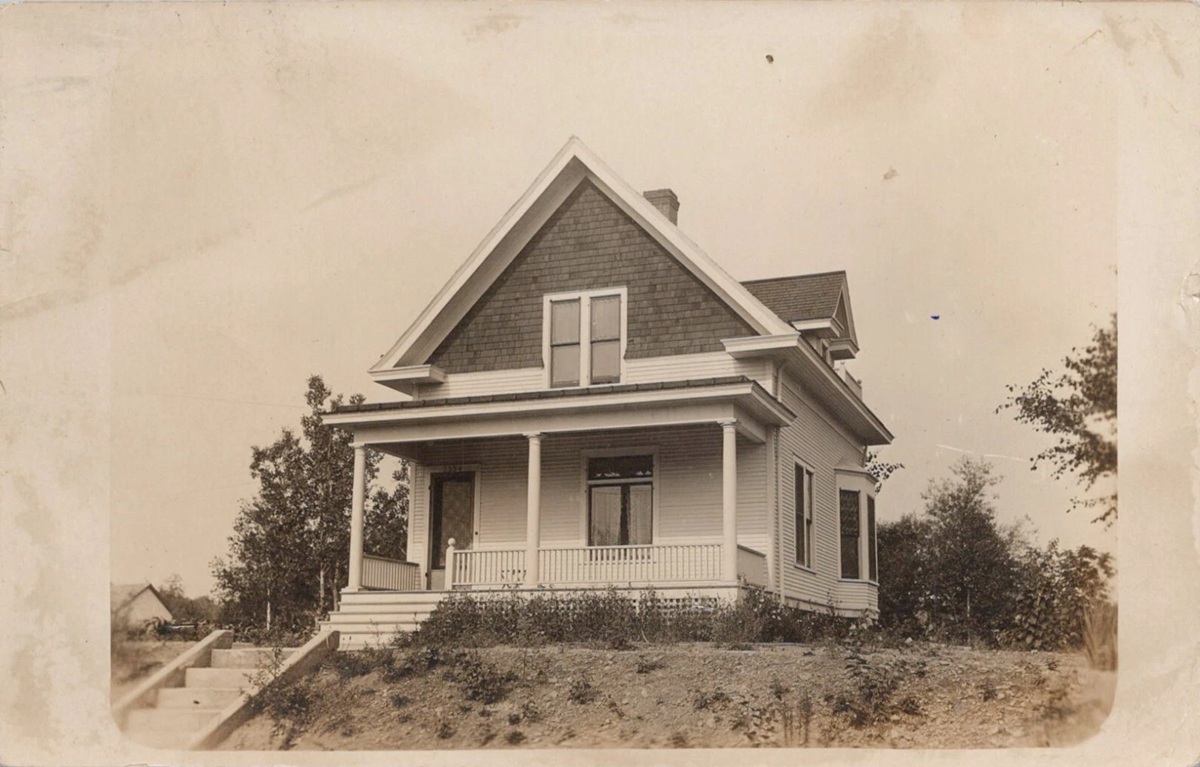
This postcard was mailed 115 years ago from Duluth, and therefore presumably shows a home in Duluth that might still be standing. (more…)
Save Time and Money: Read as You Ride

These photos of Duluth Streetcar 166 were purchased recently on eBay from a reseller who didn’t know anything about them or the other Duluth transportation photos in the lot. This one above is labelled with the time 2 p.m., date 10/27/30 and the initials ETM. (more…)
Postcard from a Bird’s Eye View of the West End in Duluth
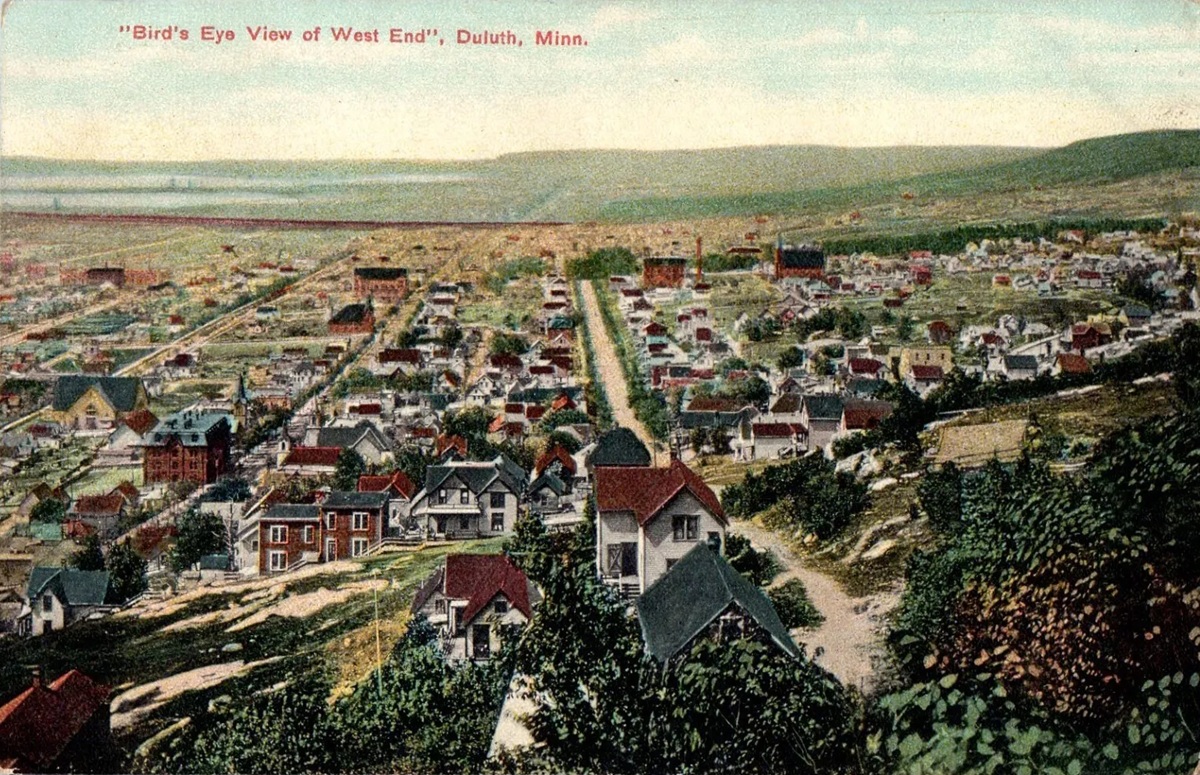
This postcard of Duluth’s friendly West End was mailed 115 years ago today — Dec. 8, 1910. The recipient was Mrs. Joseph Lindquist of Kerkhoven, Minnesota. The perspective is from the Point of Rocks at West Fourth Street, looking southwest. (more…)
Duluth Deep Dive #11: When the Hollow Concrete-Block Building Boom Came to Duluth
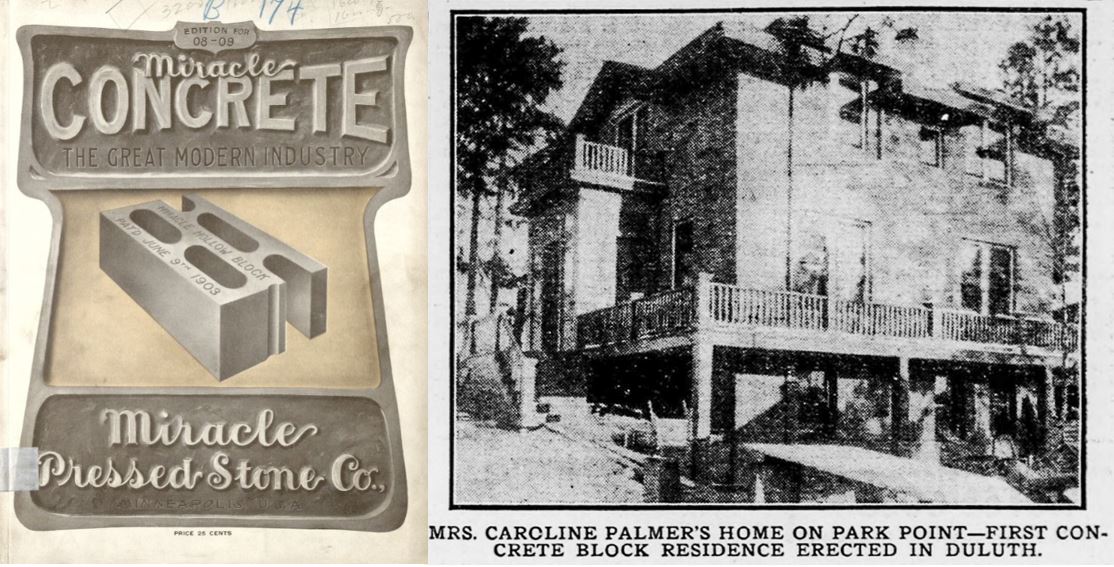
Left: Cover of the 1908 catalogue for the Miracle Pressed Stone Company of Minneapolis; Right: The first hollow concrete-block house in Duluth. (Sources: The Minnesota Digital Library; The Duluth Evening Herald, Feb. 3, 1906)
A few months ago a friend of mine from elementary school moved into a house on Park Point. When he asked me to help look into its history, we learned he had purchased the first hollow block concrete home ever built in Duluth, and one of the oldest still standing in Minnesota. This Duluth Deep Dive looks at the start of the hollow concrete-block building boom in Duluth and where it led. It describes the links between local concrete homes and the Duluth shipping canal. It also challenges the claim that Duluth had the first concrete streets in Minnesota. (more…)
Postcard from the Duluth Carnegie Library

This undated postcard, published circa 1910, shows the Carnegie Library in Downtown Duluth at 101 W. Second St. The building was designed by Edwin S. Radcliffe and Charles Willoughby Adolph Rudolf. It opened in April 1902, serving as Duluth’s main library until 1980. Since then it has functioned as an office building.
Grassfires: An Old Duluth Tradition
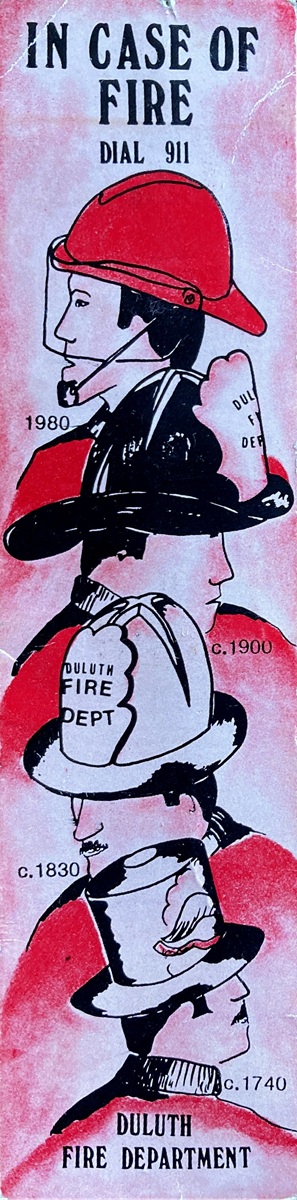
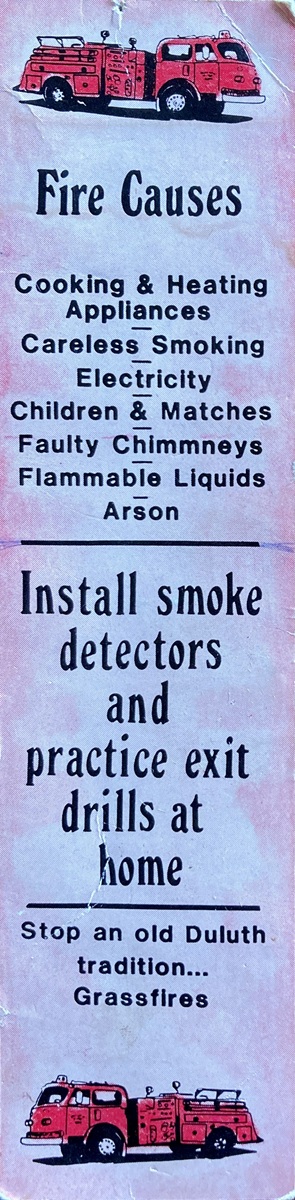
If my memory is to be trusted, this bookmark was given out to Duluth public school students circa 1980. That’s how the one shown here would have landed in my possession. Maybe someone from the fire department was a guest speaker at Laura MacArthur Elementary and passed them out. (more…)
Then and Now: Cathedral and Marshall
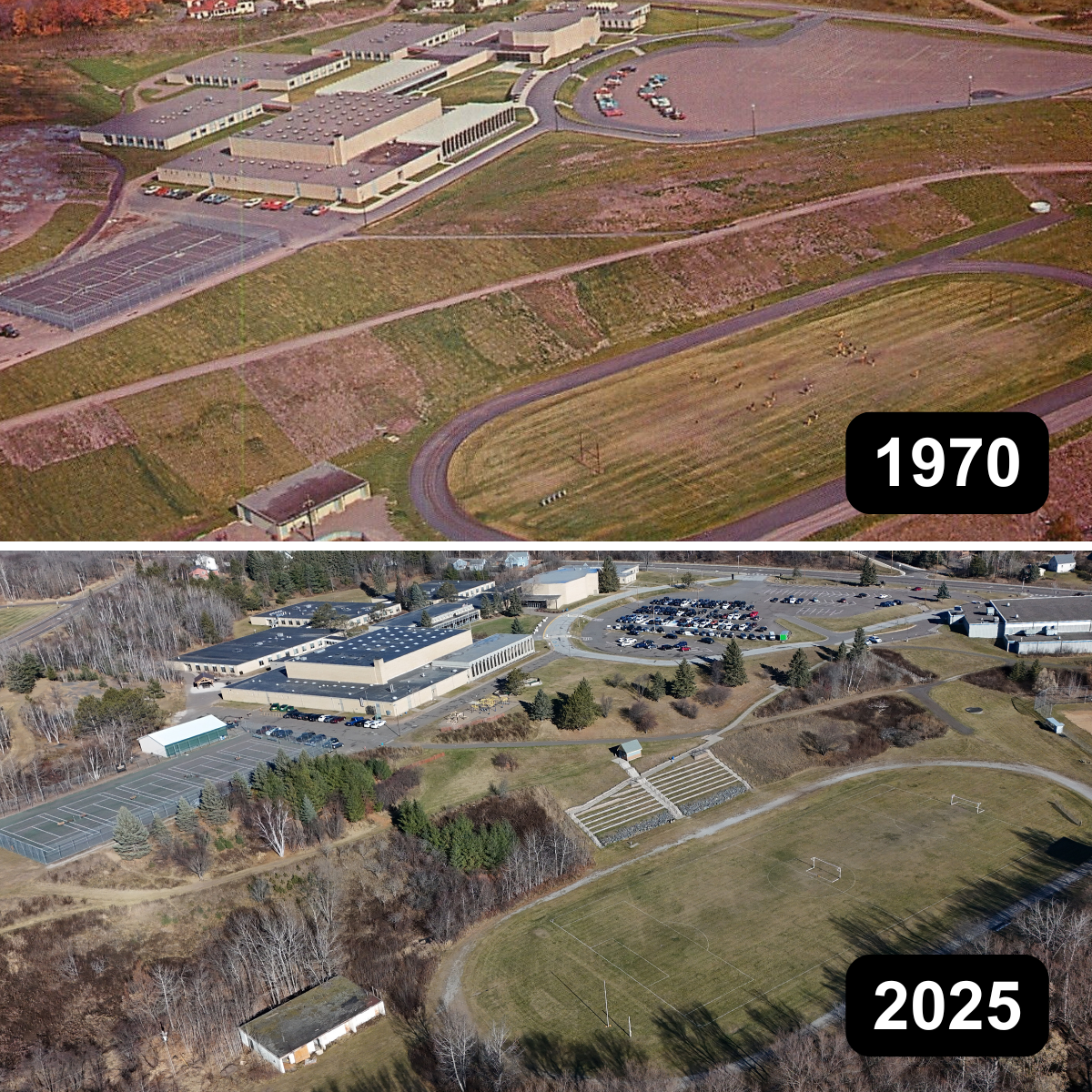
This aerial photo comparison shows Duluth Cathedral High School circa 1970 and the same campus in 2025 as Duluth Marshall School. (more…)
Duluth-area Hockey Pin-back Buttons
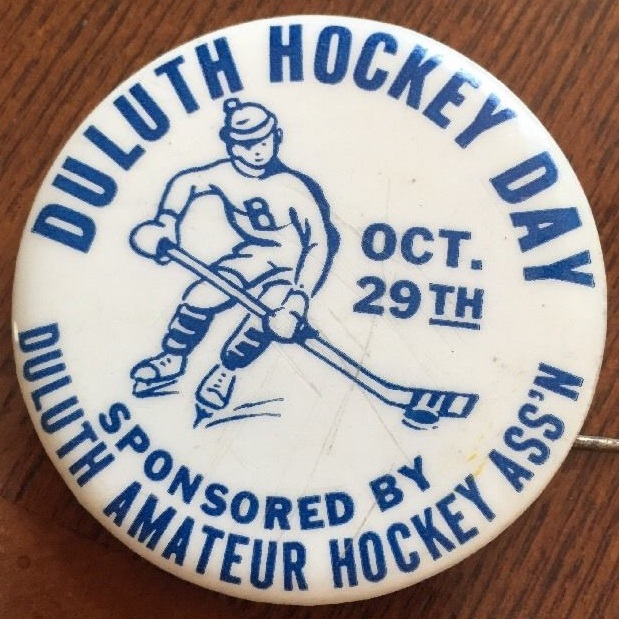
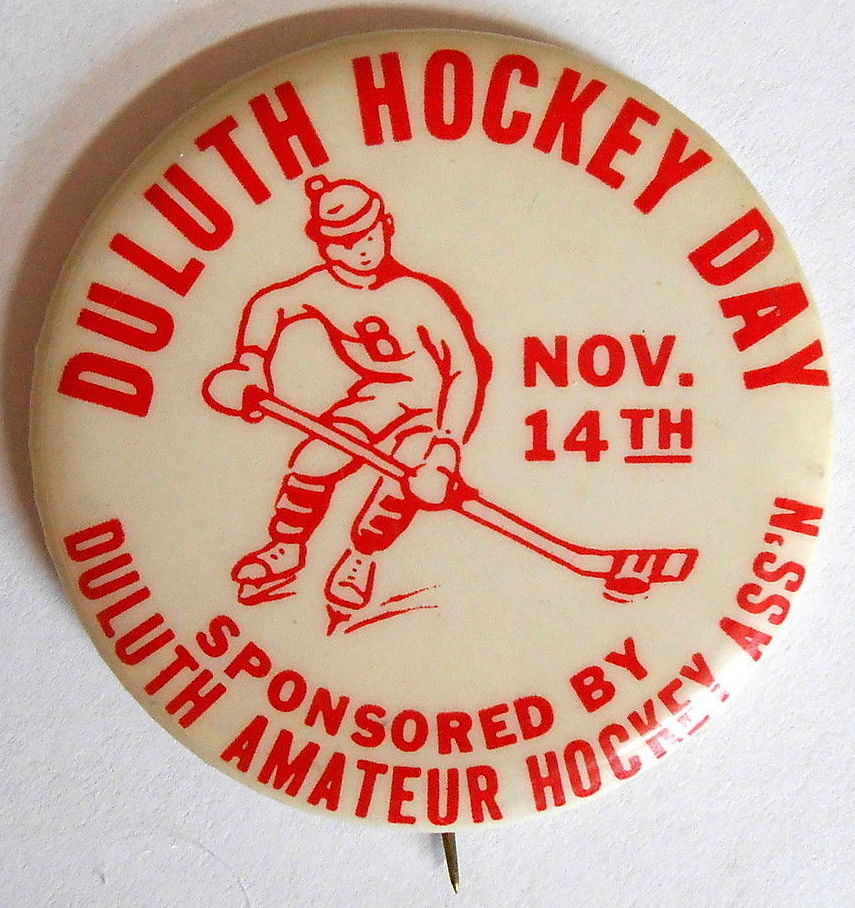
With hockey season well underway, we’ve pulled out the hockey-related buttons from Perfect Duluth Day’s larger button collection. (more…)
The inaugural Christmas City of the North Parade was in 1961
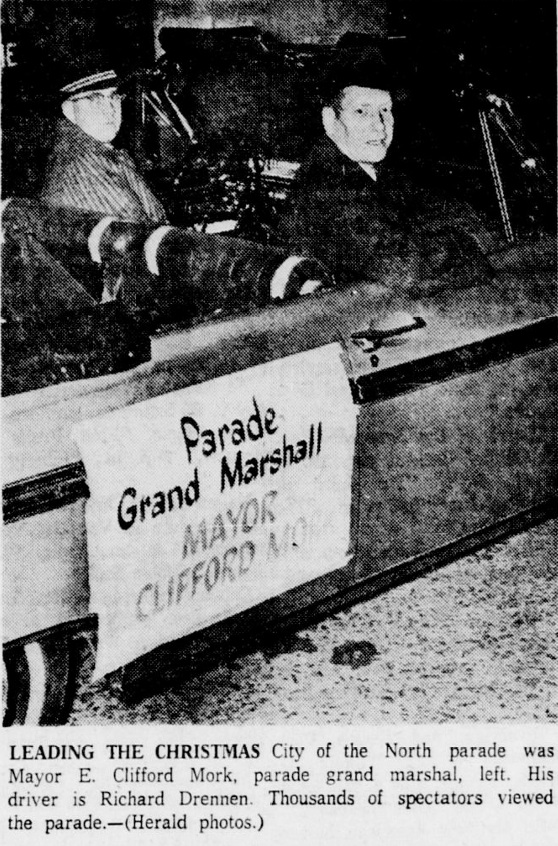
Debate about when the first Christmas City of the North Parade happened has been rekindled numerous times since 2008, when KBJR-TV promoted the 48th annual parade as the “50th annual.” That year Andrew Krueger, then a copy editor at the Duluth News Tribune, set the record straight, digging through newspaper archives that strongly suggested, but maybe didn’t definitively prove, the parade was first held in 1961.
KBJR, then and now, points to 1958 as the first year of the parade.
It is finally time to set aside unreasonable doubt. The short version of the story is this: Krueger was correct. The first Christmas City of the North Parade was held Nov. 17, 1961. (more…)
Gas Freighter Elvina

The November 1910 issue of Power Boating magazine included a photo from the Duluth Ship Canal.
The caption reads:
Elvina, a 53-foot gasoline freighter, “beating it” out of Duluth harbor on her way to Cornucopia, 40 miles across Lake Superior, which she makes back and forth every day in the season. With 40 tons of freight and passengers, as shown in the photo, she makes ten miles an hour. Her power plant equipment is a four-cylinder, Campbell, 40-horsepower machine.
United in Service: Military History from America’s Northland
From the courageous Native American Code Talkers of World War II to the dedicated members of the 148th Fighter Wing, the PBS North documentary United in Service offers a poignant exploration of what it means to serve. This compelling documentary shines a light on the diverse experiences of individuals who have answered the call to duty, preserving their invaluable stories for generations to come.
Music Making History: The Wreck of the Edmund Fitzgerald
One of Gordon Lightfoot’s most important works was “The Wreck of the Edmund Fitzgerald.” Written shortly after the shipwreck of the same name, the song comforted many, became a chart-topping success at the time, and nearly 50 years later it has found a place in popular culture and social media. The song also served as the inspiration for former Split Rock Lighthouse keeper Lee Radzak to start the annual beacon lighting to honor the crew.
This episode of the Minnesota Historical Society’s series Music Making History reflects on Lightfoot’s work, the way he responded to the families of the crew, and how the song has centered community gatherings honoring those lost at sea.
PDD Quiz: Remembering the Edmund Fitzgerald

This edition of the PDD Quiz explores how the region has commemorated the 50th anniversary of the sinking of the SS Edmund Fitzgerald.
A review of this month’s headlines comes your way on Nov. 30. Please submit question suggestions to Alison Moffat at [email protected] by Nov. 27. (more…)