

Puzzling Through the Museum of Ojibwa Culture: Saint Ignace (and Indigenous History in our Region)
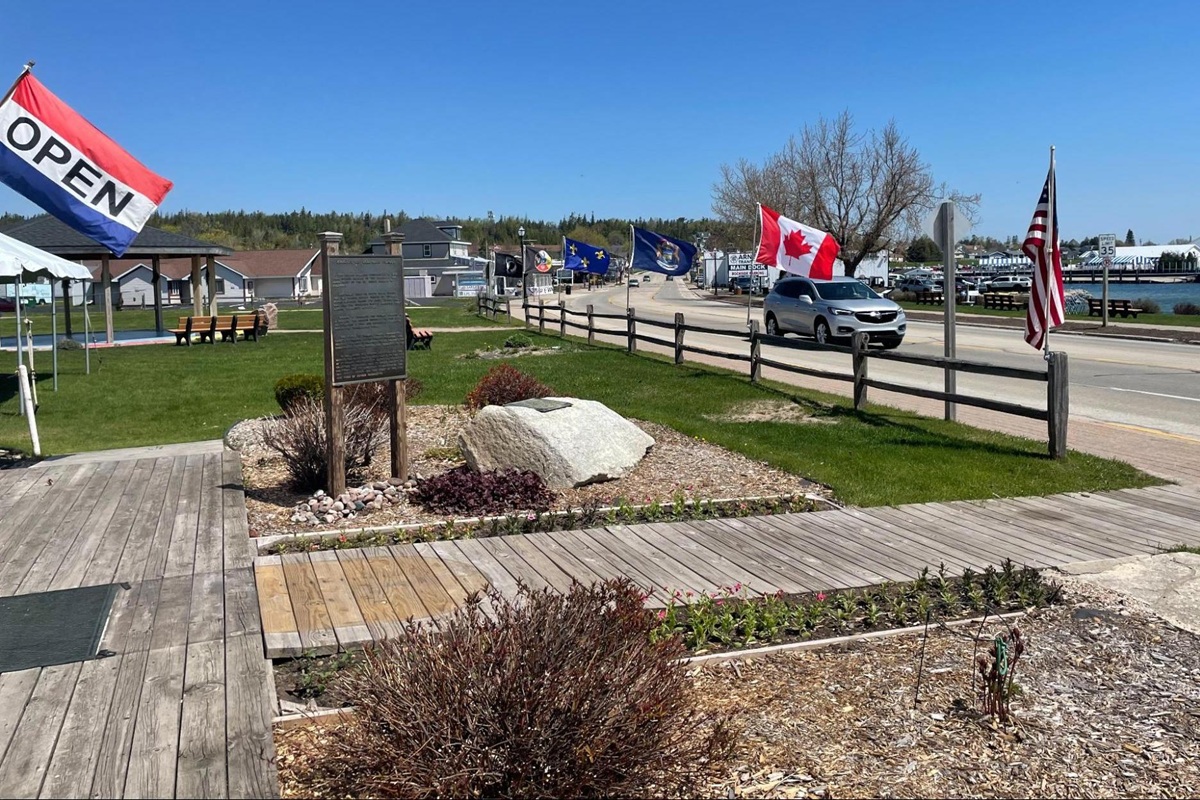
On a recent trip through the Upper Peninsula of Michigan, I stopped to visit the Museum of Ojibwa Culture in St. Ignace. The Museum is operated by the city of St. Ignace, and so “the city-operated museum and park portray a vivid picture of life in the Straits of Mackinac over 300 years ago when Ojibwa, Huron, Odawa and French lifestyles met.”
The puzzle that is the museum, to me, begins with the flags hanging outside the museum. Canadian, U.S., Michigan, French Colonial, Sault Ste. Marie Chippewa and POW/MIA flags line the street in front of the museum. What do these flags mean — do they represent the identities represented in the museum? Do they represent the identities they hope will visit the museum?
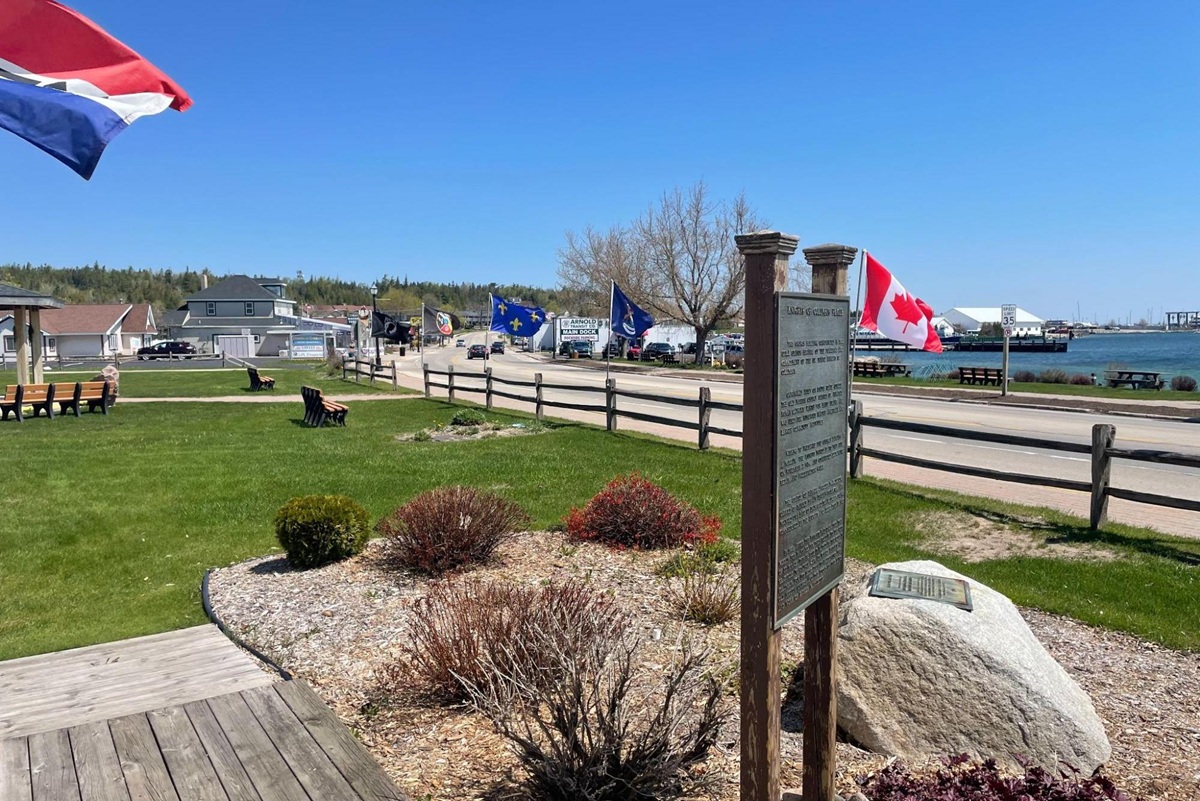
The museum sits on the site of the St. Ignace Mission. The signage outside the Museum offers a settler-colonial history of the space. The interior represents the more complicated history of the interactions between missionaries and Indigenous people in the region, including the residential schools.
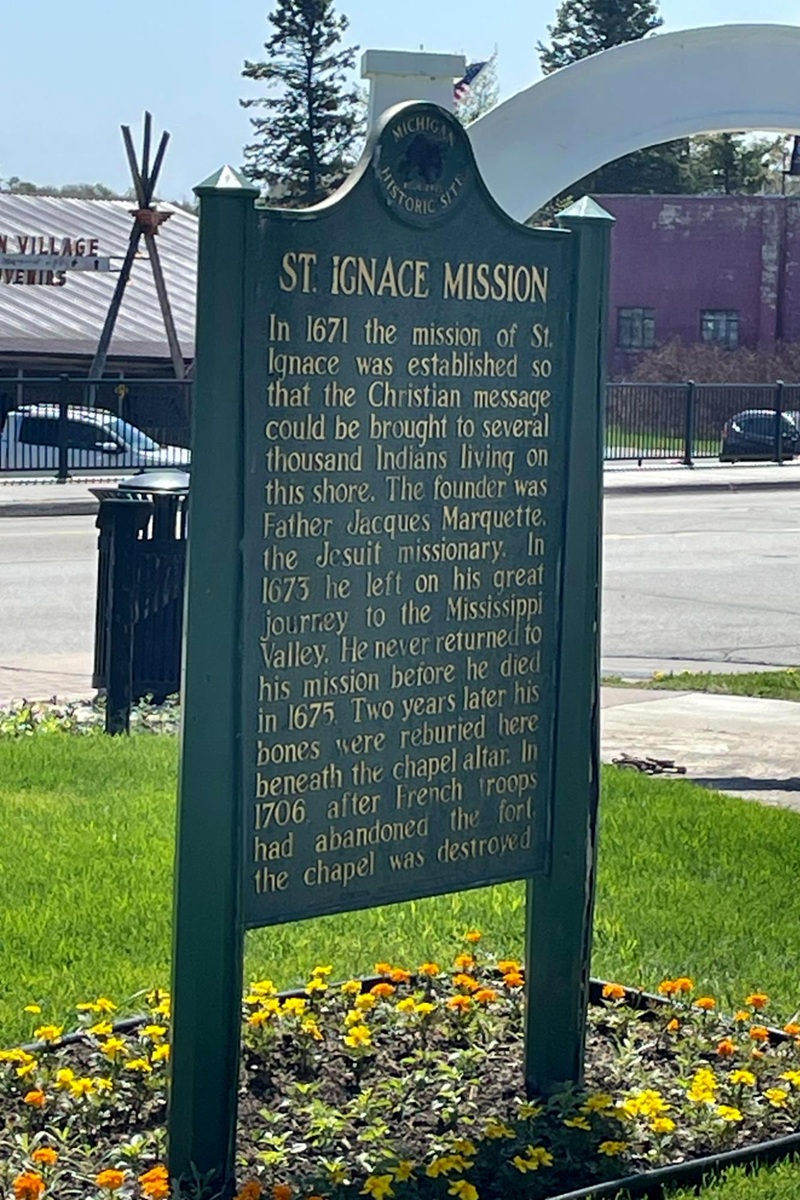
What makes this history more complicated, I think, is that the mission itself was burned to the ground in 1706. As a result, there is not a direct line from the atrocities of the 19th and 20th centuries and the missionaries of the time of Father Marquette. It’s possible, therefore, to imagine Father Marquette as “one of the good ones,” unimplicated by the violence that followed.
But of course history is never quite that easy.
I am an alum of Marquette High School and Marquette University, educated for eight years by Jesuits, and I am sure that it was among the best nonspecialist educations an individual can receive. I also recognize the complicated place of Jesuits in the history of the church — at times, carriers of Christian violence, and at other times, social revolutionaries. I tend to see the latter while I know others tend to see the former — as long as we both see both, I hope we balance out.
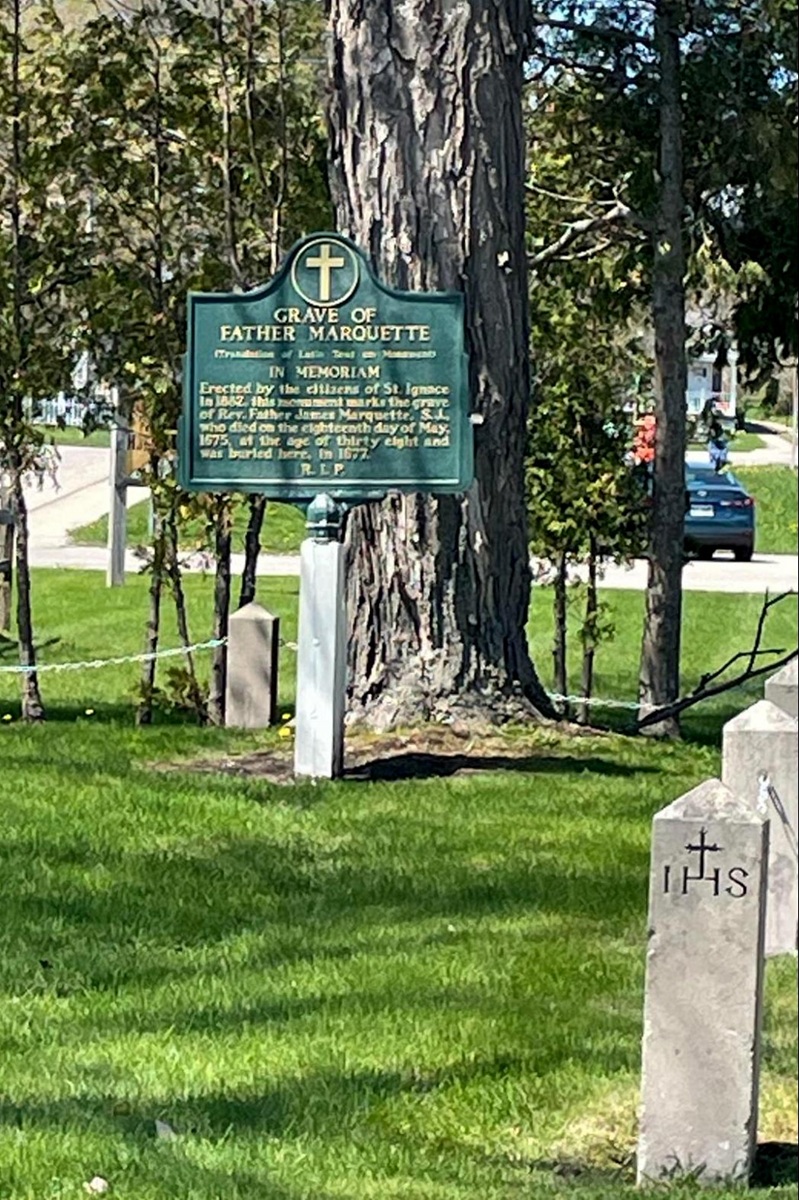
The grave of Father Marquette has been in the news lately, as the Museum of Ojibwa Culture in St. Ignace requested the return of his bones from Marquette University to the museum grounds. Several news articles and a documentary tell this story.
Radio Results Network: “Return of Father Jacques Marquette’s remains subject of special event”
MyNorth: “The Epic Return of Father Marquette’s Remains to the Straits of Mackinac”
A video of the reburial is embedded above; the gravesite is marked in the photos below.
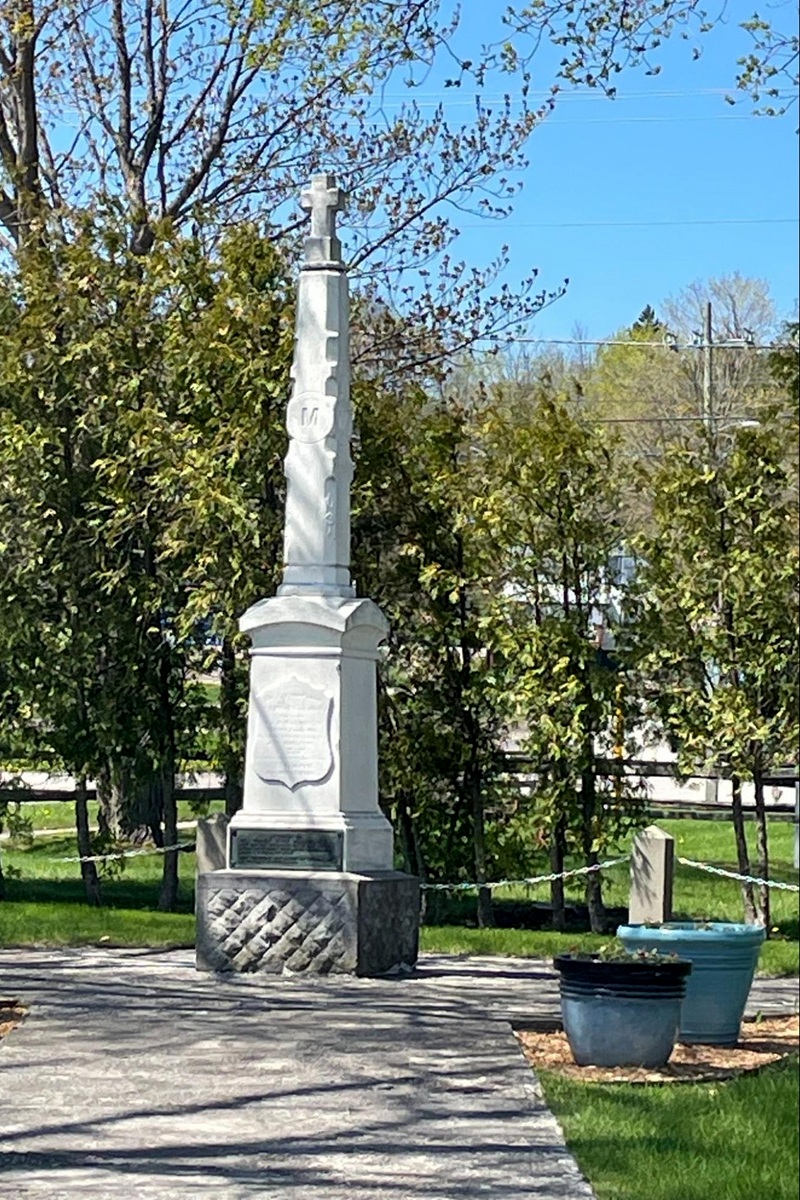
I was, as a kid, a Catholic with no mechanical or physical aptitude. So I was destined to become, in my family’s eyes, a priest. I went to graduate school instead, which is, in some ways, pretty close to a monastic life.
It broke my heart, over and over, to learn the church’s place in so many tragedies — hurting children, hurting indigenous children, and more.
So I want to hold onto something positive, like maybe this gentle recognition that one Jesuit left the communities he touched better than they were when he met them.
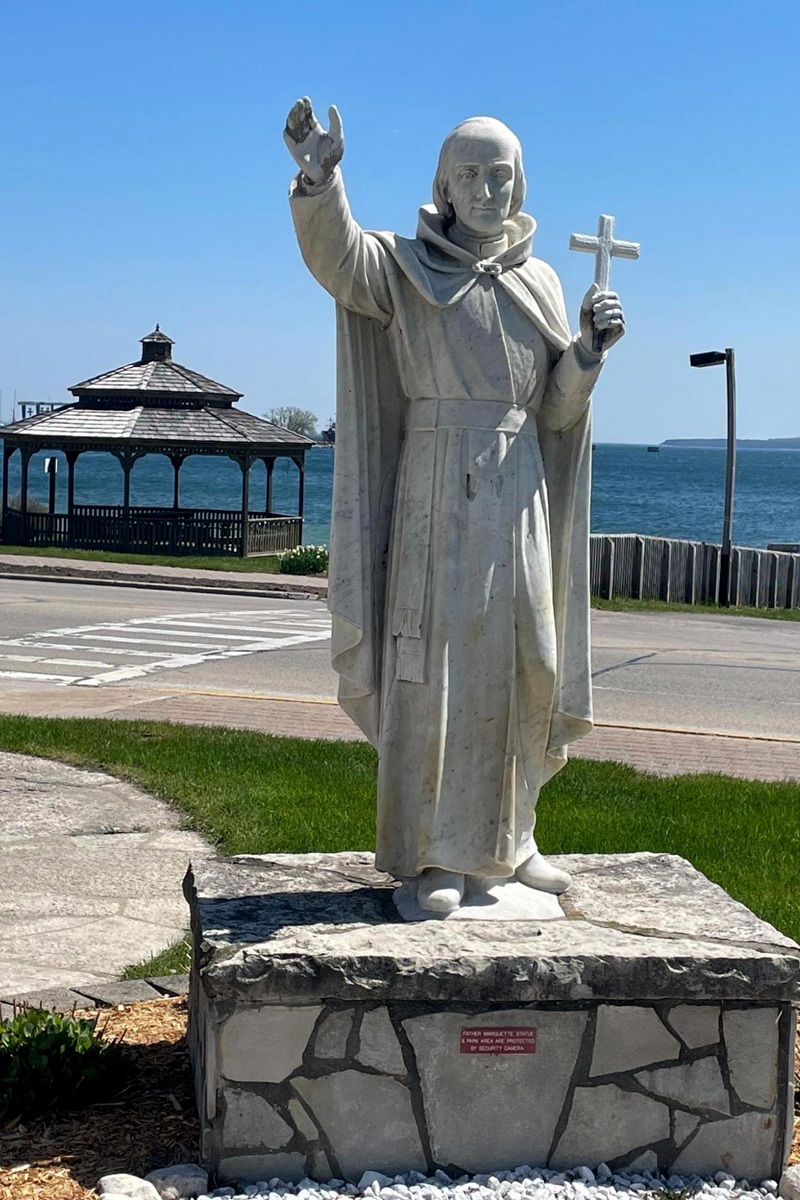
I think there may be more stories like that in our region, like the stories of the Chippewa City Church in Grand Marais and the Sawyer Log Church in Carlton County.
Staci Drouillard published Walking the Old Road: A People’s History of Chippewa City and the Grand Marais Anishinaabe, a book on the history of the community of Chippewa City. The Sawyer Log Church includes a shrine to Kateri Tekakwitha, who was canonized on Oct. 21, 2012 by Pope Benedict XVI. She is the first Native American woman to reach sainthood.
Maybe there are other such stories to be told, or that have been told, about positive interactions between settler-colonial culture and indigenous societies in our region.
Back to the flags for a second, maybe all of our institutions can hang flags that include, rather than exclude, and maybe we can design museums that celebrate such inclusion (without forgetting or erasing past harms).