

American Spirit Road Rally started and ended in Duluth in 1986
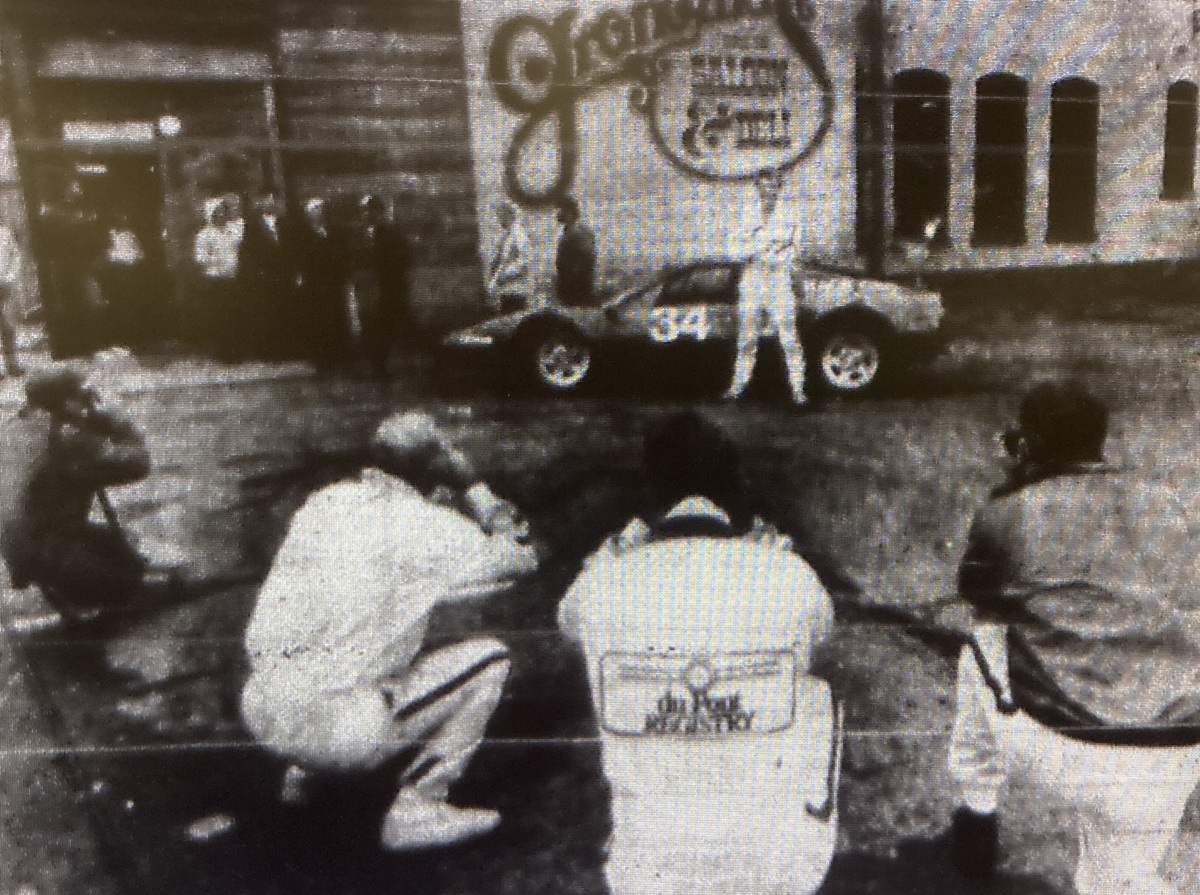
Jim Liautaud stands by his 1963 Ferrari on Sept. 20, 1986, outside Grandma’s Saloon & Deli. (Photo by Dave Ballard for the Duluth News-Tribune & Herald, from a microfilm version of the newspaper)
With a nod to The Cannonball Run, a popular movie from 1981 starring Burt Reynolds, the drivers of 27 high-performance sports cars once raced through Hibbing, Ely and other cities along a 320-mile course that started and ended in Duluth. The American Spirit ’86 Road Rally took place on Sept. 20, 1986 — 40 years ago today.
The original inspiration for the race was the Cannonball Baker Sea-to-Shining-Sea Memorial Trophy Dash, an illegal cross-country race from New York to California that was co-created in 1971 by automotive journalist Brock Yates, who later wrote the screenplay for the film based on his experiences organizing and competing in the races.
The movie, by the way, includes a reference to Duluth.
James “Big Jim” Liautaud, an industrialist and inventor of K40 radar detectors, was stirred by those legendary 1970s outlaw races and the cultural phenomena generated by the movie. Along with a group of wealthy friends he started running informal, high-speed, 400-mile “Cannonball Run-style” races on secluded roads.
Rather than going coast-to-coast, Liautaud and his group raced high-performance sports cars along Interstate 90 from Elgin, Illinois, to destinations like Hayward and Duluth. In 1986 Liautaud worked with Minnesota authorities to turn the informal, ticket-heavy race into an officially sanctioned, legal automotive rally. The original plan was for a high-speed race, but county commissioners insisted on insurance policies Liautaud was not able to secure. So instead of rewarding pure top speed, the race focused on precision and compliance with safety rules.
The starting line and rally was at Duluth’s Holiday Inn hotel. Drivers took off in one-minute intervals and were instructed to keep their speedometers at or below 55 mph or face disqualification. Their average speed was calculated to determine the winner.
“If you believe Saturday’s American Spirit ’86 Road Rally had nothing to do with speed, one of the rally competitors would love to sell you the Aerial Bridge,” began reporter Jim Muff’s article in the Duluth News Tribune & Herald the day after the race.
“Rally organizers had no way of monitoring speed outside of city and state patrols, and participants had state-of-the-art radar detectors to ensure ticket-free trips,” Muff wrote.
Leo Hopf, president of Hopt Printing in Minneapolis and a co-driver in the race, told Muff the following:
“One of the cars, I won’t say which one, videotapped their speedometer at 160 mph. We had some action on the radar, but we weren’t stopped. We drove the speed limit through towns because we don’t want any tickets or accidents, but we got up there on the highway.”
The winners of the race were David Beddor of Chanhassen and Ted Thiss of Minneapolis. They drove a Porsche 911.
The drivers were all executives at businesses they founded or owned, representing “the visible spirit of the American way.”
After the race, the cars paraded through Downtown Duluth and were exhibited during a post-race bash at Grandma’s Saloon & Deli in Canal Park.
Liautuad died at his cabin in northern Wisconsin in 2015 at the age of 79. In the early 1980s he loaned his son, Jimmy John Liautaud, $25,000 to start a sandwich shop, which later grew into the Jimmy John’s chain.